- Back number
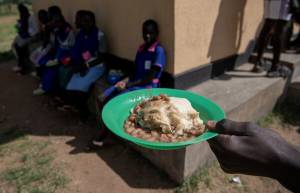
Nourishing a Generation: Fortified Whole Grains for School Feeding in Karamoja
Our vision is simple but transformative: a future where every school meal nourishes children, strengthens local farmers, and builds resilient food systems that sustain communities for generations.
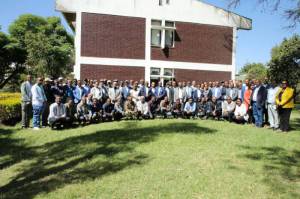
Sasakawa Africa Association Expands Impact Through Partnerships, Innovation, and Field-Level Action
The Sasakawa Africa Association (SAA) Ethiopia continues to broaden its contribution to agricultural transformation through a wide range of recent engagements that highlight its growing role in partnerships, resource mobilization, policy support, digitalization, infrastructure development, and knowledge visibility. Building on more than three decades of experience in scaling agricultural innovations, SAA is strengthening its position as a trusted partner that connects institutions, ideas, and in...
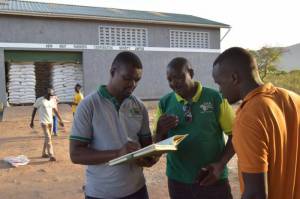
【Activity】Digital Finance for Agriculture in Karamoja: Unlocking USD 1.7 million for Smallholder Farmers
Across the semi-arid landscapes of Karamoja in Uganda, a quiet transformation is taking place. For generations, farming in the region has largely been shaped by subsistence production, unpredictable rainfall, and limited access to agricultural services. Today, however, a new model is emerging—one where smallholder farmers are increasingly organized, productive, and connected to markets.
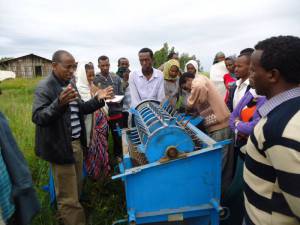
【Staff Spotlight】A Legacy of Innovation and Service: Celebrating the Career of Oumer Taha Abdulwehab
After nearly four decades of pioneering service to Ethiopia’s agricultural sector, Mr. Oumer Taha Abdulwehab retired on March 24, 2026, leaving an indelible mark on the industry. During his 16-year tenure with the Sasakawa Africa Association (SAA), Oumer became a cornerstone of postharvest innovation, successfully scaling technologies that slashed crop losses from 15% to nearly zero. A dedicated mentor and advocate for "farmer-centered" solutions, his legacy resides in the enhanced liv...
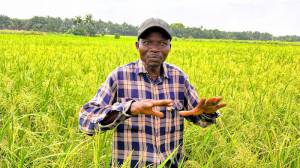
【Farmers' story】From flooded fields to climate solutions: How one Beninese farmer turned rice farming into a pathway for prosperity and decarbonization
At dawn in Koussin Lélé, a low-lying rice-growing community in Benin’s Zou region, the paddies shimmer under a thin veil of water. For decades, scenes like this have symbolized both sustenance and struggle for smallholder farmers, fields that feed families, yet quietly release methane, a greenhouse gas far more potent than carbon dioxide. For farmers like Ahitchékpon Nestor, 50, rice was once a matter of survival alone. Today, it has become a story of climate action, innovation, and dignity rest...
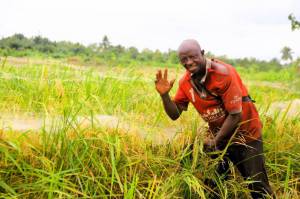
【Farmers' story】From struggling to confidence: How Climate-Smart Rice Farming Transformed Patrice Hongbete’s Future in Benin
Mr. Patrice Hongbete in Tchi Ahomandégbé community now uses less seed and farms less land, but farms it better using SAA climate smart technologies.
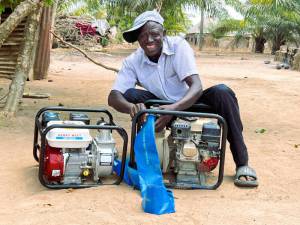
【Farmers' story】Regenerative Agriculture in Nigeria: How Climate-Smart Farming Doubled Yusuf’s Rice Yield
A Struggle with Traditional Methods
Mr. Yusuf Ijeh Ekom, a 43-year-old rice farmer, from Alagye community in Doma Local Government Area of NNasarawa State, Nigeria,is inspiring change across his community. Through training, determination, and timely support, he has transformed not only his farm but also his livelihood.
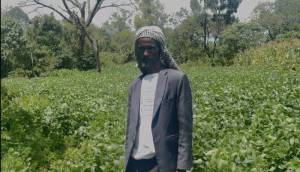
【Farmers' story】From Four Days of Backbreaking Labor to One Hour: A Locally Fabricated Soybean Thresher is transforming postharvest work in Jimma
For years, Mr. Sheh Gali and his neighbors spent four days manually threshing just a quarter hectare of soybeans. That changed in late December 2025 with the launch of Ethiopia’s first locally fabricated soybean thresher. Developed by SAA and The Nippon Foundation with Aybar Engineering PLC, this innovation reduces days of work to just one hour. For Mr. Sheh Gali, the result is clear: "The quality speaks for itself."
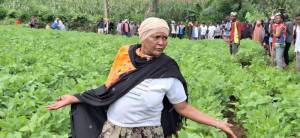
【Farmers' story】Women Leading Agricultural Innovation in Ethiopia: Meryema Aba Sura’s Soybean Success Story
Ms. Meryema Aba Sura is a 45-year-old widow and mother of four living in Decha Nedhi Kebele, Nedhi Gibe District, Jimma Zone, Oromia Region.
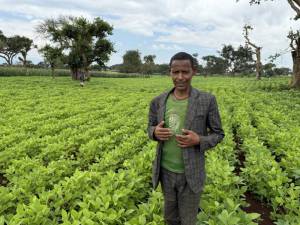
Harvest that Changed Everything: Mr. Dejene’s Soybean Journey in Ethiopia
Five years ago, Mr. Dejene Yimer planted soybeans on a modest quarter-hectare plot in Chello Kebele, Dedessa District. He did so not out of conviction, but on the advice of an extension worker.
SAA Publications
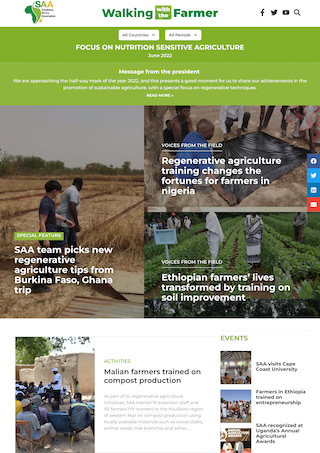
E-newsletter
"Walking with the Farmer"
SAA publishes a bimonthly e-newsletter reporting on SAA activities.
SAA Mail News
Sign up to receive our e-newsletter and upcoming event information via email.

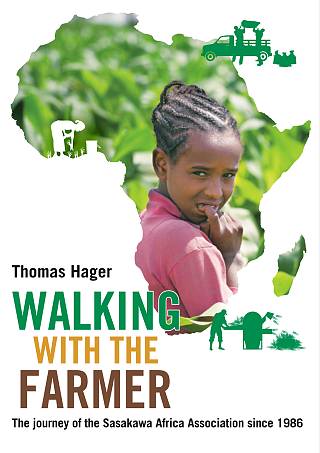
SAA history book
"Walking with the Farmer: The journey of the Sasakawa Africa Assoication since 1986"
This book chronicles the history of SAA from its inception to the present.

Annual Report
Annual Report FY2023
Annual Report FY2023 is available here.


