Beyond Agricultural Extension
— SAA 2030 Roadmap for Building Resilient, Farmer-Centered Agrifood Systems —
Since 1986, SAA has been working on strengthening the agricultural extension system in sub-Saharan Africa to support smallholders in gaining a variety of skills and knowledge in agriculture. SAA has worked to improve the livelihoods of smallholder farmers and reduce poverty by strengthening the relationship between National Agriculture Research and Extension Systems, Universities, International Agricultural Research Centers, extension workers and farmer organizations; and by providing comprehensive support, covering the entire value chain from production, postharvest, agro-processing and marketing.
However, sub-Saharan Africa today faces increasingly complex and interconnected challenges, including soil degradation, climate change, rapid population growth, youth unemployment, rising fertilizer prices associated with conflicts, and broader food system vulnerabilities. In response, there is a growing need to move beyond increasing production alone and toward strengthening food, nutrition, and income security across the entire food system — from production to consumption.
SAA launched its five-year Strategic Plan (2021-2025) in 2021. Building on this foundation and the lessons learned, SAA has established its Strategic Plan (2026-2030) to further evolve and deepen the previous one. While maintaining continuity with the core directions of the 2021–2025 Strategic Plan, the new strategy places greater emphasis on supporting broader transformation across food systems, while continuing to place farmers at the center of its approach.
The strategy strengthens SAA’s focus on institutional capacity development, farmer organizations, rural youth employment, regenerative and market-oriented agriculture, and supporting the integration of practical field-based solutions into national systems and policies. At the same time, SAA recognizes the importance of farmers’ own knowledge, experience, and local practices, and seeks to combine these strengths with scientific knowledge, innovation, partnerships, and markets.
Through this approach, SAA seeks to contribute to more resilient, inclusive, and sustainable agricultural systems across Africa by 2030.
Download: SAA Strategic Plan 2026-2030 (PDF)
Download: SAA Strategic Plan 2021-2025 (PDF)
Sustainable Development Goals(SDGs)
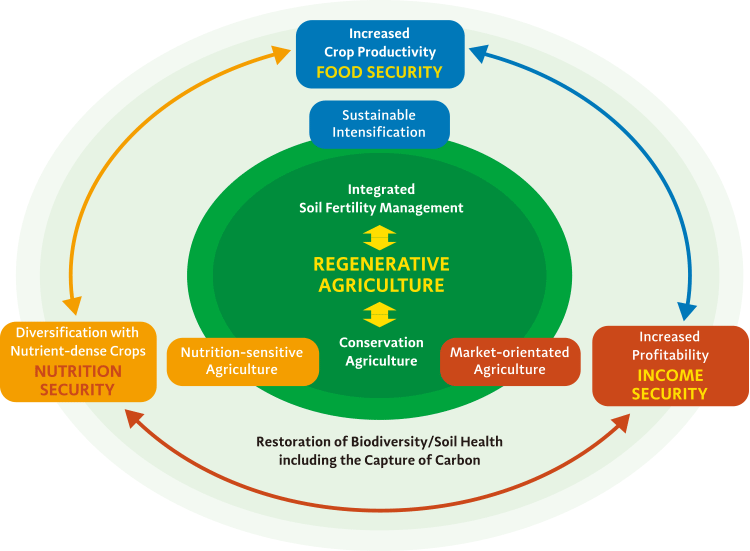
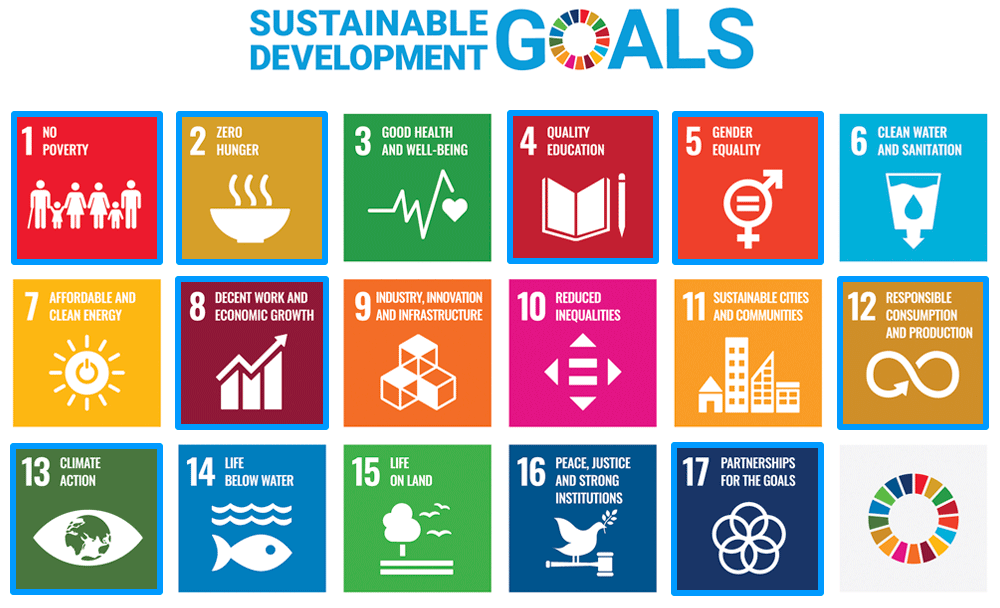
The Sustainable Development Goals (SDGs) were adopted by the United Nations as a universal call to action to end poverty and improve environmental sustainability. There are a total of 17 Goals, all of which are integrated in the recognition that action in one area will inevitably affect outcomes in others.
Through various interventions, SAA will primarily contribute to Goal 2: End hunger, achieve food security and improved nutrition and promote sustainable agriculture. SAA aims to boost productivity, close the yield gap, provide sufficient nutritious food in line with population growth, as well as strengthen the linkage to markets to improve family incomes.
SAA also contributes to the following SDGs:
- Goal 1: End poverty in all its forms everywhere.
- Goal 4: Ensure inclusive and equitable quality education and promote lifelong learning opportunities for all.
- Goal 5: Achieve gender equality and empower all women and girls.
- Goal 8: Promote sustained, inclusive and sustainable economic growth, full and productive employment and decent work for all.
- Goal 12: Ensure sustainable consumption and production patterns. Reduce postharvest losses through technical backstopping.
- Goal 13: Take urgent action to combat climate change and its impacts by regulating emissions and promoting developments in renewable energy.
- Goal 17: Strengthen the means of implementation and revitalize the global partnership for sustainable development.
Contents
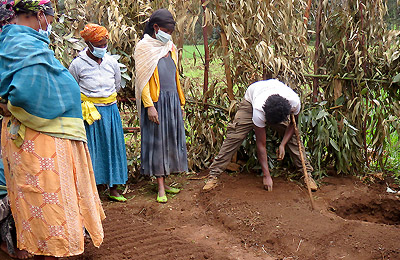
Strategic Focus Area 1: Climate-Resilient and Sustainable Agrifood Systems
SAA establishes regenerative agriculture by deploying context-specific practice bundles that integrate conservation agriculture and Integrated Soil Fertility Management with digital climate services.
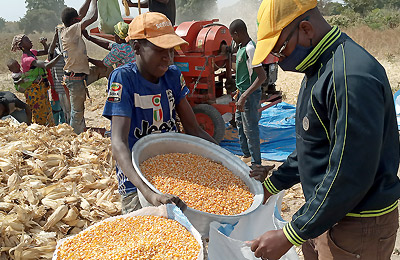
Strategic Focus Area 2: Inclusive Markets and Agri-business Development
SAA elevates smallholder business capacity and entrepreneurial competitiveness through “farming as a business,” accelerating their shift toward a “grow-to-sell” commercial approach within inclusive value chains.
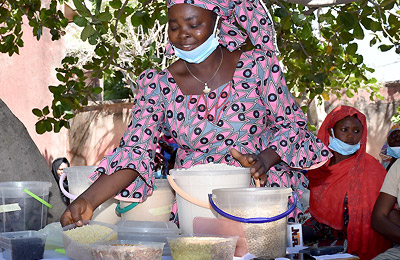
Strategic Focus Area 3: Safe, Adequate and Nutritious Food Systems
SAA advances nutrition-sensitive agriculture by scaling the production, smart processing, and marketing of biofortified and nutrient-dense crops, alongside behavior change nutrition education.
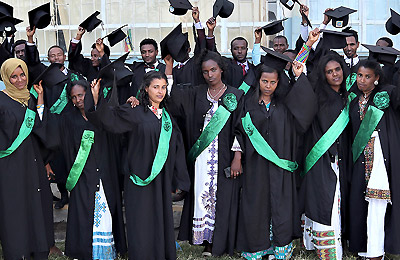
Cross-cutting 1: Capacity building
Central to all of SAA’s activities is capacity building for human resources and institutions, including farmer organizations, universities and public/private agricultural extension systems.
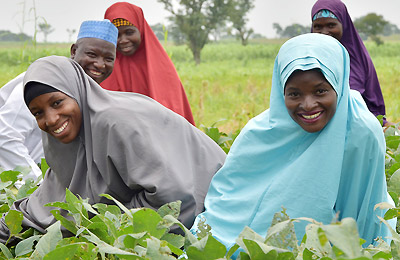
Cross-cutting 2: Inclusiveness
SAA is committed to empowering women, youth and people with disabilities by facilitating their participation in the agricultural sector.
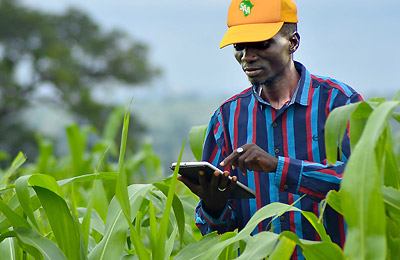
Cross-cutting 3: Digitalization (DX)
SAA actively utilizes and encourages the use of Information and Communications Technology (ICT) to fill the information gap between smallholder farmers and stakeholders.
SAA Publications
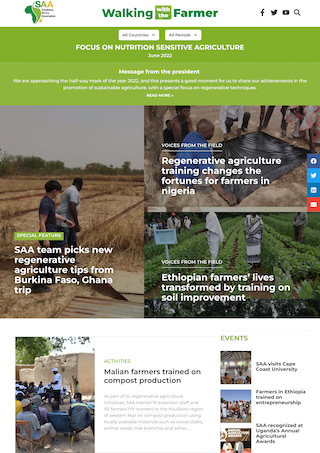
E-newsletter
"Walking with the Farmer"
SAA publishes a bimonthly e-newsletter reporting on SAA activities.
SAA Mail News
Sign up to receive our e-newsletter and upcoming event information via email.

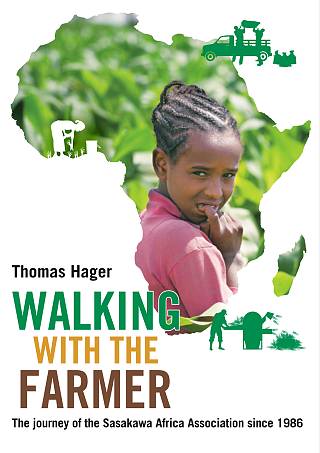
SAA history book
"Walking with the Farmer: The journey of the Sasakawa Africa Assoication since 1986"
This book chronicles the history of SAA from its inception to the present.
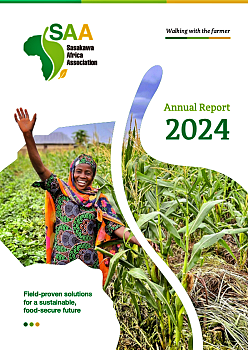
Annual Report
Annual Report FY2024
Annual Report FY2024 is available here.


