Inclusive Markets and Agri-business Development
SAA promotes inclusive markets and agri-business development by supporting smallholder farmers to transition from subsistence production to profitable, market-oriented agribusiness. Through market-driven approaches, equipping producers with the knowledge, skills and market information needed to make informed production decisions, improve product quality, and respond to changing market opportunities, shifting mindsets toward a “grow-to-sell” commercial approach. Scaling proven approaches such as JICA’s Smallholder Horticulture Empowerment and Promotion (SHEP) model, SAA enhances agricultural value chains by improving access to quality inputs, post-harvest technologies —such as mechanized threshing and milling—to accelerate bulk market aggregation, meet commercial buyer standards, and maximize profit margins for smallholders. Through targeted value-chain interventions, SAA strengthens cooperative governance and agri-SME competitiveness via entrepreneurship and collective marketing training. It accelerates financial inclusion and market linkages by brokering strategic partnerships with input dealers, output brokers, and microfinance institutions. Ultimately, by integrating digital market platforms, it drives supply-chain traceability and removes structural barriers for women and youth to unlock sustainable rural growth. SAA also promotes stronger partnerships among farmers, input suppliers, financial institutions, processors, traders, and other market actors to create more inclusive and competitive agribusiness ecosystems. Through digital market platforms and targeted support for women and youth, SAA expands economic opportunities, improves market transparency, and contributes to sustainable rural livelihoods and economic growth.
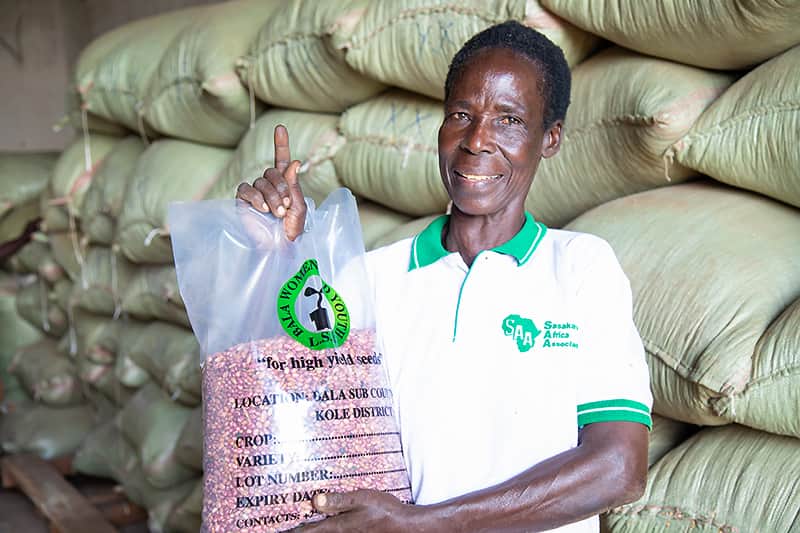
A woman farmer holding her high yielding bean seed ready for sell, Uganda
Voices from the Field
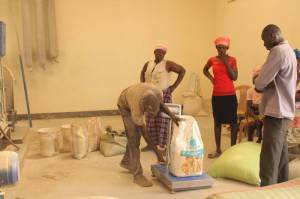
【Activity】Boosting Rice Incomes in Uganda: How a Japan-Funded One-Stop Centre is Transforming the Value Chain in Otuke
In northern Uganda’s Otuke District, rice and cereal farming underpin rural livelihoods. Yet for years, farmers faced a fundamental constraint: the absence of local processing and organized market infrastructure. For a farmer-owned cooperative, the Otuke Town Council Farmers’ Savings and Credit Cooperative Society Ltd, the main bottleneck was not production. With 1,000 members, including 490 women, the organization found that its growth was constrained by what happened after the harvest.
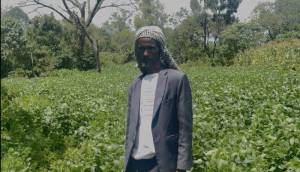
【Farmers' story】From Four Days of Backbreaking Labor to One Hour: A Locally Fabricated Soybean Thresher is transforming postharvest work in Jimma
For years, Mr. Sheh Gali and his neighbors spent four days manually threshing just a quarter hectare of soybeans. That changed in late December 2025 with the launch of Ethiopia’s first locally fabricated soybean thresher. Developed by SAA and The Nippon Foundation with Aybar Engineering PLC, this innovation reduces days of work to just one hour. For Mr. Sheh Gali, the result is clear: "The quality speaks for itself."
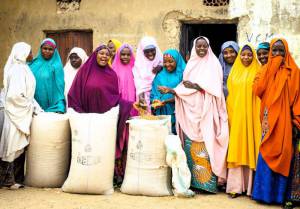
Women Farmers in Kano Join Forces to Start Strong Trading Group
Eager to escape harsh economic realities, 10 women in the Barkun region of Nigeria’s Kano State teamed up in 2021 to form an association for collective trading, Barkum Women Rice Processors.
SAA Publications
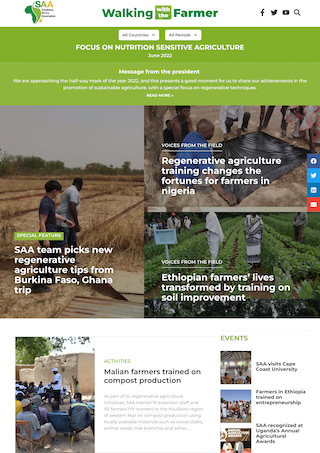
E-newsletter
"Walking with the Farmer"
SAA publishes a bimonthly e-newsletter reporting on SAA activities.
SAA Mail News
Sign up to receive our e-newsletter and upcoming event information via email.

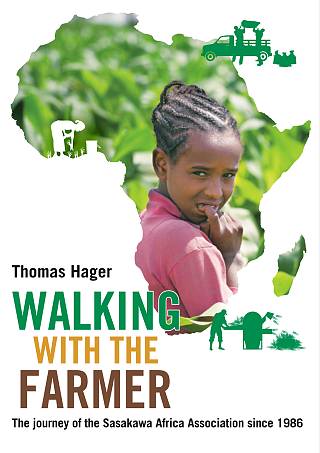
SAA history book
"Walking with the Farmer: The journey of the Sasakawa Africa Assoication since 1986"
This book chronicles the history of SAA from its inception to the present.
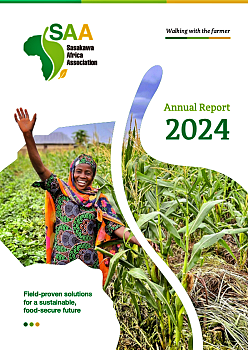
Annual Report
Annual Report FY2024
Annual Report FY2024 is available here.


