SAA Nigeria Supports Capacity Building on Regenerative Agriculture and Post-Harvest Management in Rice Production
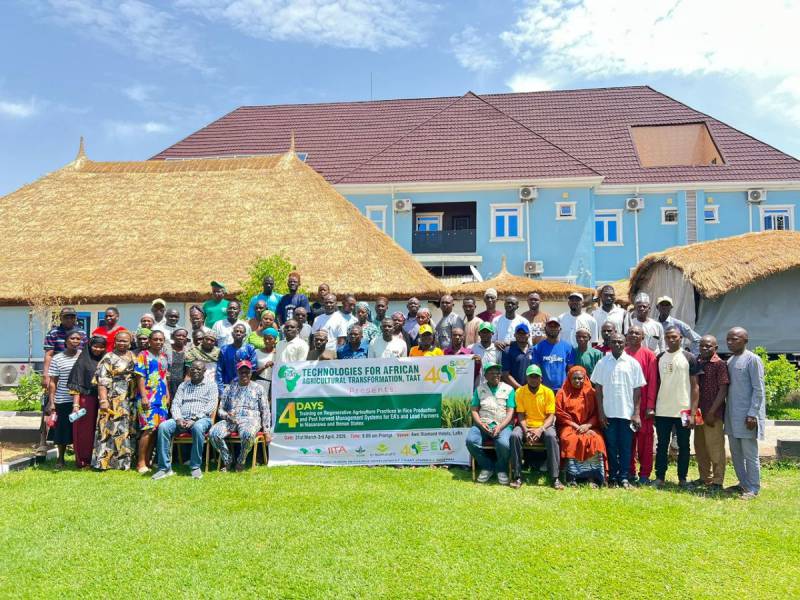
Sasakawa Africa Association (SAA) Nigeria is supported the implementation of a four-day capacity-building training on Regenerative Agriculture and Post-Harvest Management in Rice Production.
The training was held in Lafia, Nasarawa State, from March 30 to April 4, 2026, was led by the International Institute of Tropical Agriculture (IITA)/TAAT under the Evidence-Based Regenerative Agriculture to Address Climate Change in Africa Project. It is designed to strengthen the knowledge and skills of Extension Agents and Lead Farmers from Benue and Nasarawa States in the adoption of climate-smart, regenerative, and post-harvest management practices for improved rice production.
A total of 116 Extension Agents and Lead Farmers from Benue and Nasarawa States are participating in the programme, which focuses on equipping stakeholders with practical knowledge and skills in regenerative agriculture, climate-smart farming, and post-harvest management practices for sustainable rice production.
A Collaborative Multi-Stakeholder Approach
The training is being delivered through a multi-stakeholder partnership involving SAA Nigeria and technical experts from Africa Rice, the IITA/TAAT Clearing House, IITA/TAAT Excellence in Agronomy, and the African Agricultural Technology Foundation (AATF).
The programme builds on the momentum of a similar training conducted earlier in March on regenerative agriculture for maize production. Together, the two initiatives form part of broader efforts to promote resilient farming systems and strengthen the capacity of farmers and extension agents to respond to climate-related challenges while improving productivity and reducing losses along agricultural value chains.
Speaking during the training, the Lead Facilitator, Dr. Dogara Danbaba, emphasized the importance of building farmers’ and extension workers’ capacity around practical solutions that improve productivity while safeguarding natural resources. Regenerative and post-harvest management were highlighted as critical components of sustainable food production and food security.
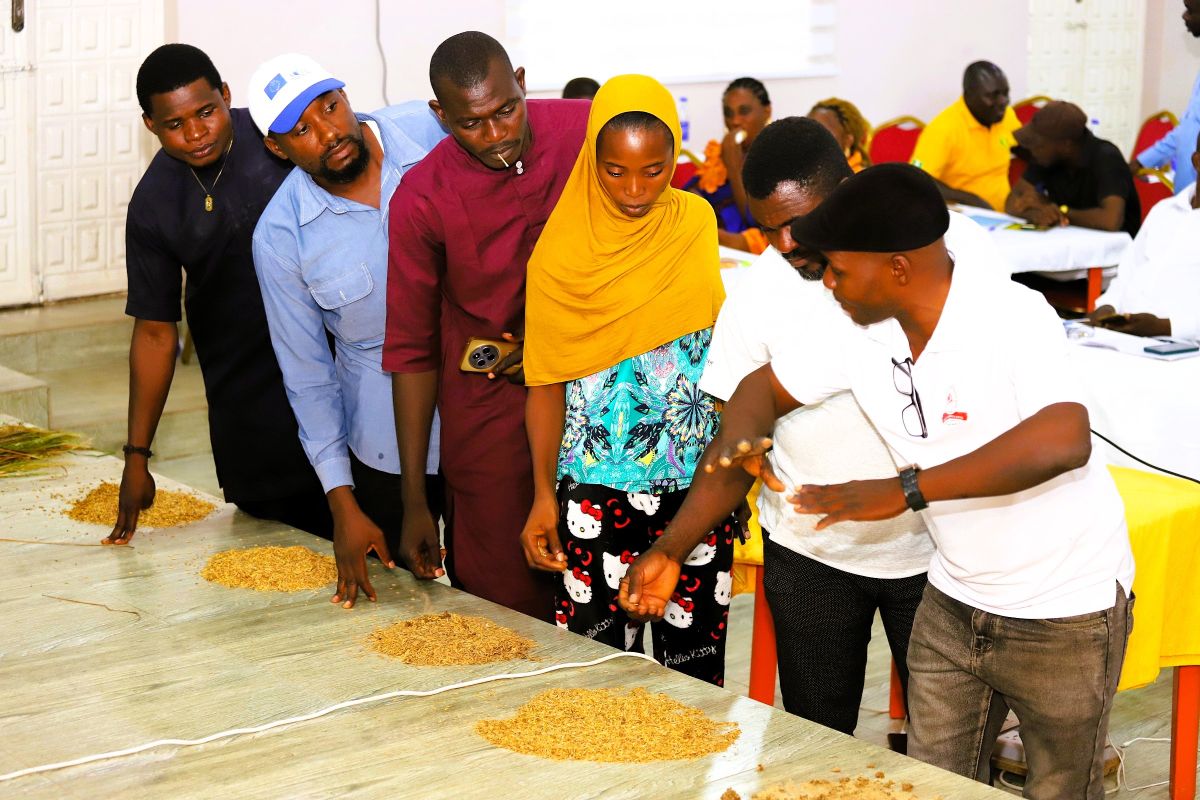
Practical demonstration sessions on biochar and value addition activities during the training in Lafia, Nasarawa State.
Farmers Reflect on New Learning Opportunities
Participants also shared reflections on the value of the training. Zainab Abdullahi, a female farmer noted:
“The training has made me understand the effects of post-harvest loss and how to contribute to its reduction to achieve food security.”
Reflecting on lessons from the broader regenerative agriculture sessions, Zainab further stated:
“The training has opened my eyes to regenerative practices that will help me to achieve optimal yield in maize production. It is interesting to note that these practices are not complicated yet have far-reaching effects on the environment and crop performance. Thank you, IITA/TAAT, for this opportunity.”
Through its support to this initiative, SAA Nigeria continues to contribute to strengthening the capacities of farmers and extension systems to adopt practical, evidence-based solutions that promote sustainable agriculture, climate resilience, and improved livelihoods.
SAA Publications
E-newsletter
"Walking with the Farmer"
SAA publishes a bimonthly e-newsletter reporting on SAA activities.
SAA Mail News
Sign up to receive our e-newsletter and upcoming event information via email.

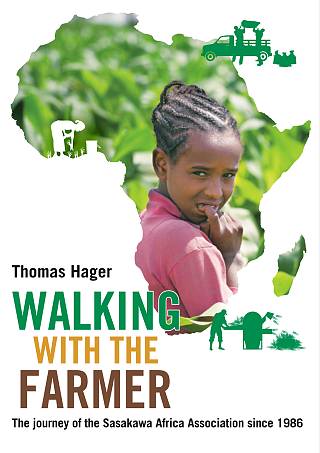
SAA history book
"Walking with the Farmer: The journey of the Sasakawa Africa Assoication since 1986"
This book chronicles the history of SAA from its inception to the present.

Annual Report
Annual Report FY2023
Annual Report FY2023 is available here.


