【Activity】Solar Irrigation and Water Access in Karamoja, Uganda: SAA’s Integrated Finance Model Strengthens Climate Resilience

In Uganda’s Karamoja region, climate change is not an abstract risk it directly shapes daily survival. Prolonged dry spells, erratic rainfall, and rising temperatures continue to strain water availability for household use, livestock, and crop production, undermining food security and livelihoods. While irrigation is widely recognized as part of the solution to climate variability, experience in Karamoja shows that adoption is constrained less by farmer interest or technology availability, and more by chronic water scarcity and high costs of accessing reliable water sources.
Why standalone Irrigation Fails
Sasakawa Africa Asscoation (SAA) Uganda’s experience in Karamoja demonstrates that irrigation initiatives often fail when introduced as standalone technologies. Key challenges include: seasonal shallow wells that dry up quickly, distant or contested surface water sources, and high borehole drilling costs remain beyond the reach of most households and farmer groups. As a result, irrigation systems introduced without secure water sources are often underutilized, limiting productivity gains and returns on investment.
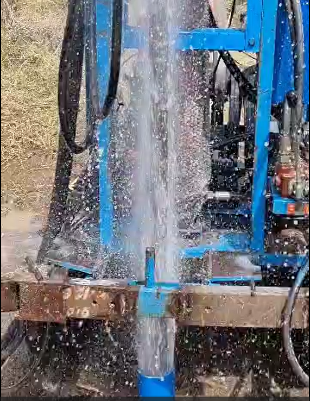
A splash of water from a newly drilled borehole in Karamoja, marking improved access to water for agricultural production.
A Systems-Based Water and Irrigation Model
In response, SAA adopted a systems-based approach tailored to Karamoja’s agro-pastoral context, integrating water access, irrigation technology, and financing. The approach links solar-powered irrigation systems with groundwater detection, borehole drilling, and structured financing, ensuring water solutions that support household consumption, livestock watering, and crop production.
Blended Finance to Lower Barriers
Through partnerships with Tulima Solar, Centenary Bank, and private-sector groundwater detection and drilling companies such as GRC, SAA is scaling access to integrated water irrigation systems using a blended cost-sharing and credit-financing model. Farmers contribute 40 percent of system costs through credit, while the Government of Uganda covers 60 percent, significantly lowering entry barriers.
To reduce risk, groundwater viability is confirmed before investment, water infrastructure is bundled with irrigation systems, and service agreements ensure drilling quality and after-sales support. Delivery is anchored in SAA’s Commercial Community-Based Facilitator (CCBF) model, providing last-mile support and building local service ecosystems.
.jpeg)
A Karamoja resident smiles following the successful drilling of a new water source.
Growing Demand and Scaling Impact
With a targeted 10,000 irrigation units and over 20 percent of farmers already placing orders, the model demonstrates strong demand when water access constratints are addressed holistically. By unlocking reliable water in Karamoja, this integrated approach is strengthening climate resilience, stabilizing livelihoods, and enabling a gradual transition toward productive, market-oriented agro-pastoral systems.
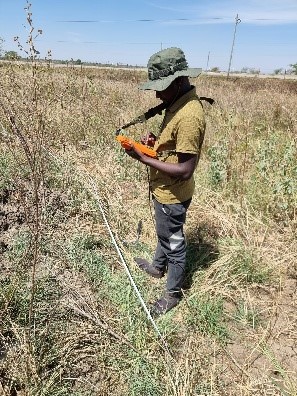
Groundwater detection conducted to guide borehole drilling in Karamoja.
SAA Publications
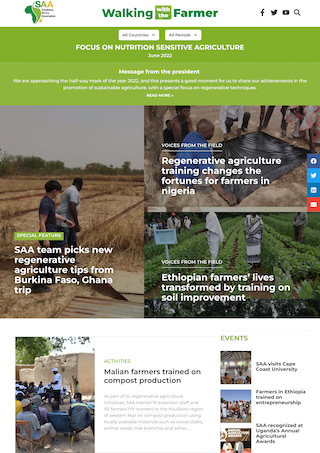
E-newsletter
"Walking with the Farmer"
SAA publishes a bimonthly e-newsletter reporting on SAA activities.
SAA Mail News
Sign up to receive our e-newsletter and upcoming event information via email.

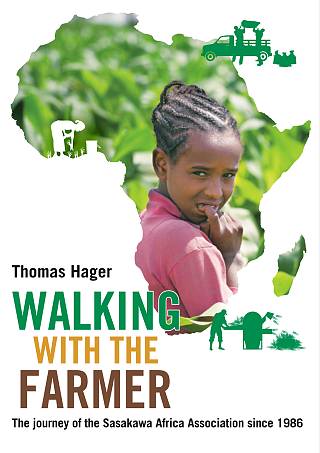
SAA history book
"Walking with the Farmer: The journey of the Sasakawa Africa Assoication since 1986"
This book chronicles the history of SAA from its inception to the present.
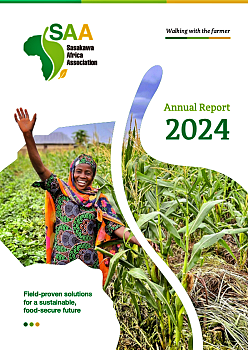
Annual Report
Annual Report FY2024
Annual Report FY2024 is available here.


