【Farmers' story】Combating Child Malnutrition in Uganda: How Nutrition Model Homes Are Transforming Communities in Kole District
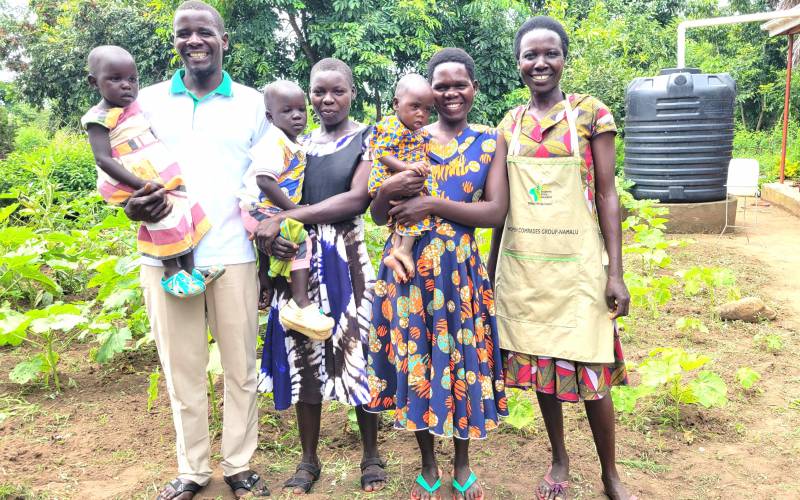
Across rural Uganda, undernutrition remains a persistent challenge driven not only by food insecurity, but also by limited dietary diversity, poor hygiene practices, and deeply rooted beliefs that shape how illness is understood and addressed. In Kole District, these challenges are particularly acute. Malnutrition is often misinterpreted as witchcraft or a curse, leading to stigma, fear, and social isolation for affected families. In many communities, households with malnourished children suffer silently blamed, avoided, and left without guidance or support. The experience of one family in Alito Sub-county reflects the reality faced by many across the region.
A Family in Crisis
Two years ago, Okello Innocent (28) and his wife, Akite Nancy (25), were living through one of the darkest periods of their lives. Their three-year-old twins were severely malnourished, emaciated, frequently ill, and visibly weak. Instead of receiving compassion, the family became the subject of whispers and suspicion. Neighbours attributed the children’s condition to witchcraft. Some avoided the household altogether, fearing bad luck or spiritual contamination. The stigma was crushing. Within the home, fear and helplessness took hold. Innocent and Nancy, themselves frail and often unwell, lacked both the knowledge and confidence to respond. Meals were inadequate, hygiene practices limited, and long-held beliefs offered no solutions. “People looked at us with pity and fear,” Nancy recalled. “We were ashamed, and we were afraid we would lose our children.”
This pattern is not unique. Across Kole and neighboring districts, many households face similar stigma and delayed care, allowing preventable malnutrition to worsen. The silence surrounding these beliefs can be as dangerous as hunger itself.
From Model Homes to Thousands of Families
A decisive shift came with the establishment of Nutrition Model Homes by the Sasakawa Africa Association (SAA), supported by The Nippon Foundation, under SAA’s Nutrition-Sensitive Agriculture (NSA) pillar. These model homes are intentionally designed as community-based learning hubs not clinics and not lecture halls, but safe, practical spaces where families learn, ask questions, and confront harmful beliefs without judgement.
In Kole District alone, the approach has directly supported vulnerable households like the Okellos. Across multiple districts, SAA’s Nutrition Model Home approach has reached more than 12,860 households, benefiting pregnant and lactating women, young children, and entire families through repeated training, follow-up, and peer learning.
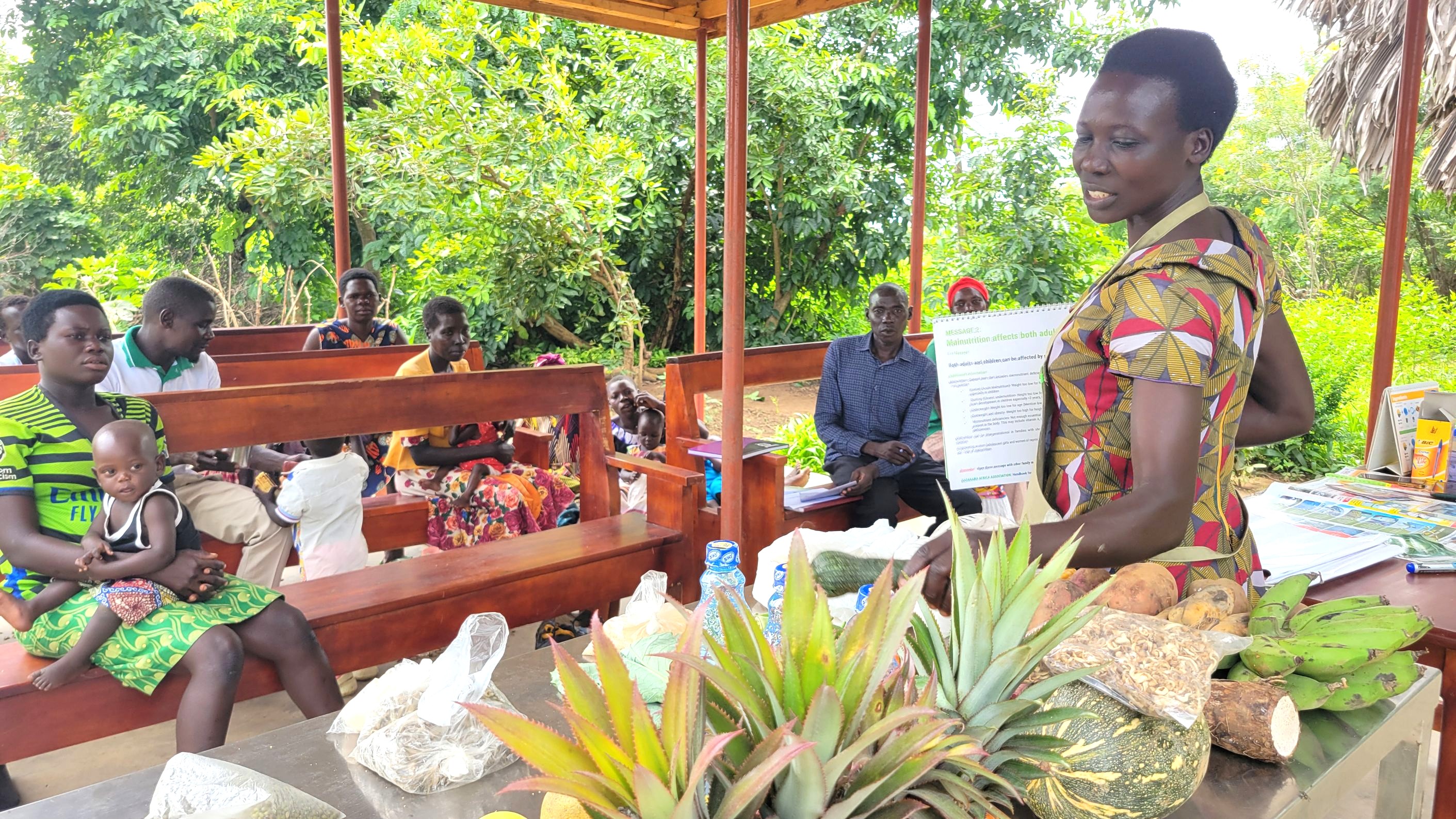 Nutrition training sessions underway at a Nutrition Model Home in Kole District
Replacing Fear with Knowledge
When Innocent and Nancy joined the program, they committed fully. Through hands-on sessions on infant and young child feeding, balanced diets using locally available foods, hygiene and sanitation, safe water use, food storage, and backyard gardening, the family began to understand the real causes of their children’s condition. Cooking demonstrations and peer discussions gradually replaced fear with clarity. “For the first time, we understood that our children were not bewitched,” Nancy said. “They were simply not getting the right food. That truth lifted a heavy burden from our hearts.” In a community where medical science is often overshadowed by traditional myths, this shift in perspective was transformative. It replaced the paralyzing shame of being "bewitched" with empowering knowledge that the family could protect their children through informed action.
A Visible Transformation
The change was both emotional and measurable. The twins’ Mid-Upper Arm Circumference (MUAC) scores steadily improved, moving from the red zone to the green. Illness declined, strength returned, and laughter replaced fear. As the family regained confidence, stigma faded. Neighbours who once avoided the household began to visit, ask questions, and seek advice. Today, the Okello Household has become a living classroom, helping others understand that malnutrition is preventable and reversible.
Restoring Health and Dignity
The experience in Kole reinforces a critical lesson, in fragile contexts shaped by misinformation, lasting nutrition outcomes require confronting harmful social beliefs as much as addressing technical gaps. By grounding solutions at the household level and combining knowledge, practice, and sustained follow-up, SAA’s Nutrition Model Homes are restoring not only health, but dignity replacing fear with understanding, and silence with hope, at scale, one household at a time.
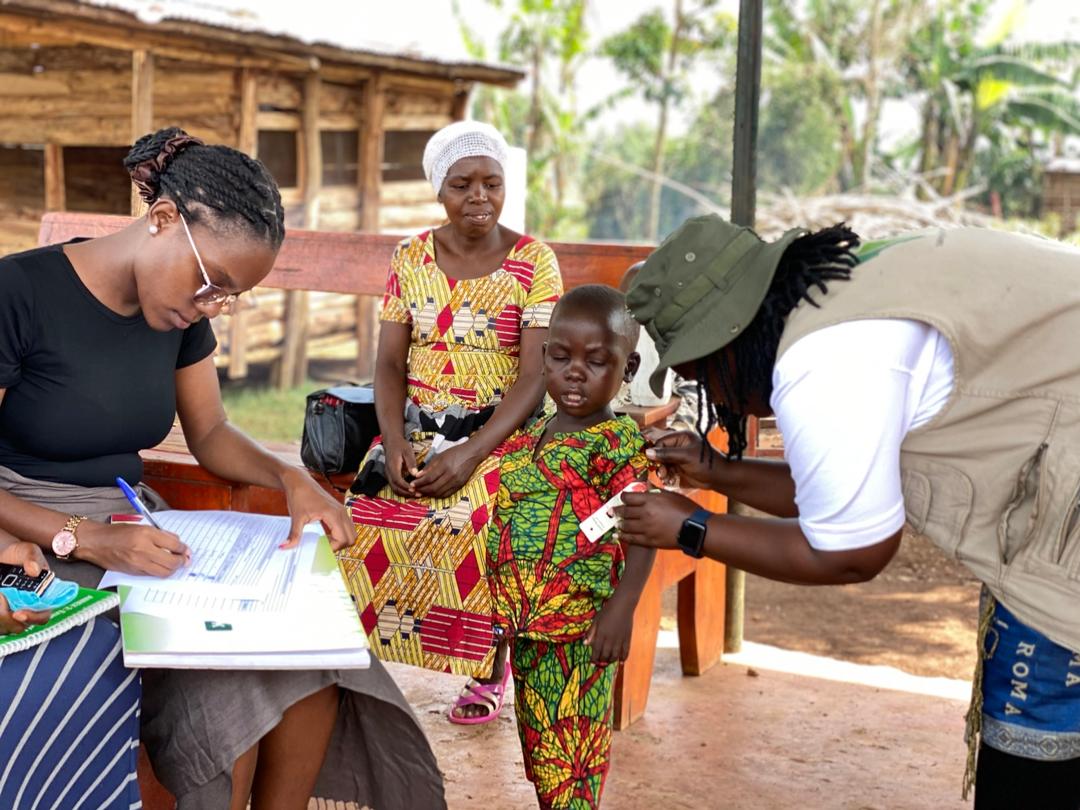 SAA staff verifying the nutrition status of an 8-year-old boy using MUAC tapes.
SAA Publications
E-newsletter
"Walking with the Farmer"
SAA publishes a bimonthly e-newsletter reporting on SAA activities.
SAA Mail News
Sign up to receive our e-newsletter and upcoming event information via email.

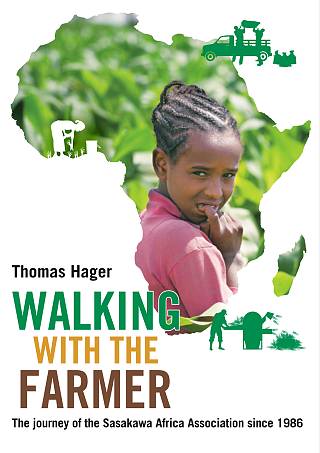
SAA history book
"Walking with the Farmer: The journey of the Sasakawa Africa Assoication since 1986"
This book chronicles the history of SAA from its inception to the present.
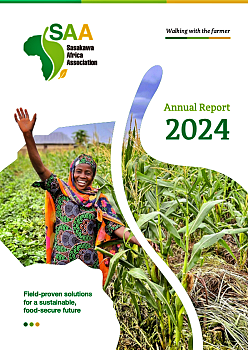
Annual Report
Annual Report FY2024
Annual Report FY2024 is available here.


