AfDB Delegation Commends SAA’s Regenerative Agriculture Work, Explores Opportunities for Scaling
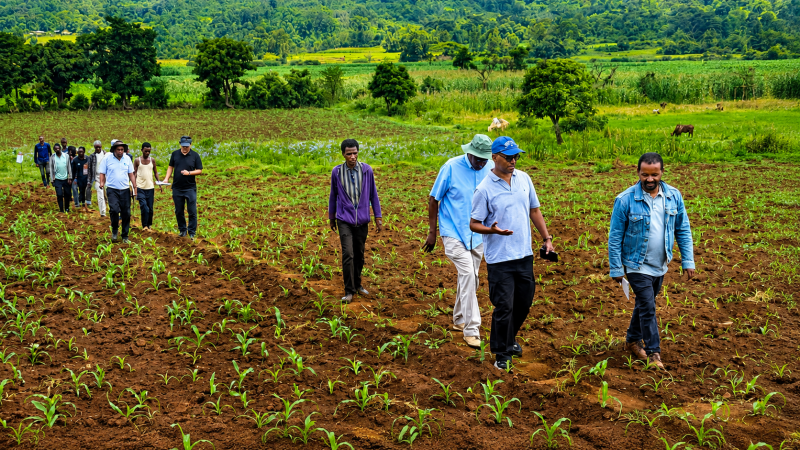
A high-level delegation from the African Development Bank (AfDB) has commended the Sasakawa Africa Association's (SAA) regenerative agriculture interventions in Ethiopia, recognizing their strong potential to enhance agricultural productivity, strengthen climate resilience, and contribute to sustainable agricultural transformation across Africa.
The delegation, led by Mr. Tomoki Nakai, Executive Director of the AfDB, included Dr. Innocent Musabyimana, Chief Agricultural Technologies Officer, and Ms. Rosa Lugos, Principal Resource Mobilization Officer. On 22 June 2026, the delegation visited SAA field sites in Seka Chekorsa Woreda, Jimma Zone, Ethiopia, where they observed the implementation of the project, Evidence-based Regenerative Agriculture to Address Climate Change in Africa. The project is supported through Japan's Policy and Human Resource Development Grant (PHRDG) and demonstrates innovative regenerative agriculture practices aimed at improving soil health, increasing productivity, and building climate resilience among smallholder farmers.
The field visit provided the delegation with an opportunity to assess project progress firsthand, interact with participating farmers and local partners, and gain insights into the practical application and impact of regenerative agriculture technologies. Discussions also explored opportunities for scaling successful interventions beyond the current project to benefit more farming communities across Africa.
On 23 June 2026, the delegation held strategic discussions with SAA Management at the Strategic Partnerships Office (SPO) in Addis Ababa. The meeting focused on the project's achievements, lessons learned, opportunities for strengthening collaboration between AfDB and SAA, and strategies for expanding evidence-based regenerative agriculture approaches to support Africa's broader agricultural transformation agenda.
Showcasing Regenerative Agriculture in Action
The project generates AI-enabled scientific evidence on the benefits of regenerative agriculture while developing incentive mechanisms that encourage adoption by smallholder farmers to sustainably increase productivity, enhance profitability, and reduce greenhouse gas (GHG) emissions.
Accompanied by zonal and woreda government officials, extension agents, farmers, university representatives, and the SAA team, the AfDB delegation visited a range of project implementation sites that showcased regenerative agriculture in practice. These included maize demonstration plots, cluster-based maize scaling sites, demonstrations at the Shashemene Farmer Training Center, the AI-powered e-kakashi digital agriculture platform, GHG monitoring activities using gas chamber-based carbon measurement technologies, and the biochar production facility at Jimma University.
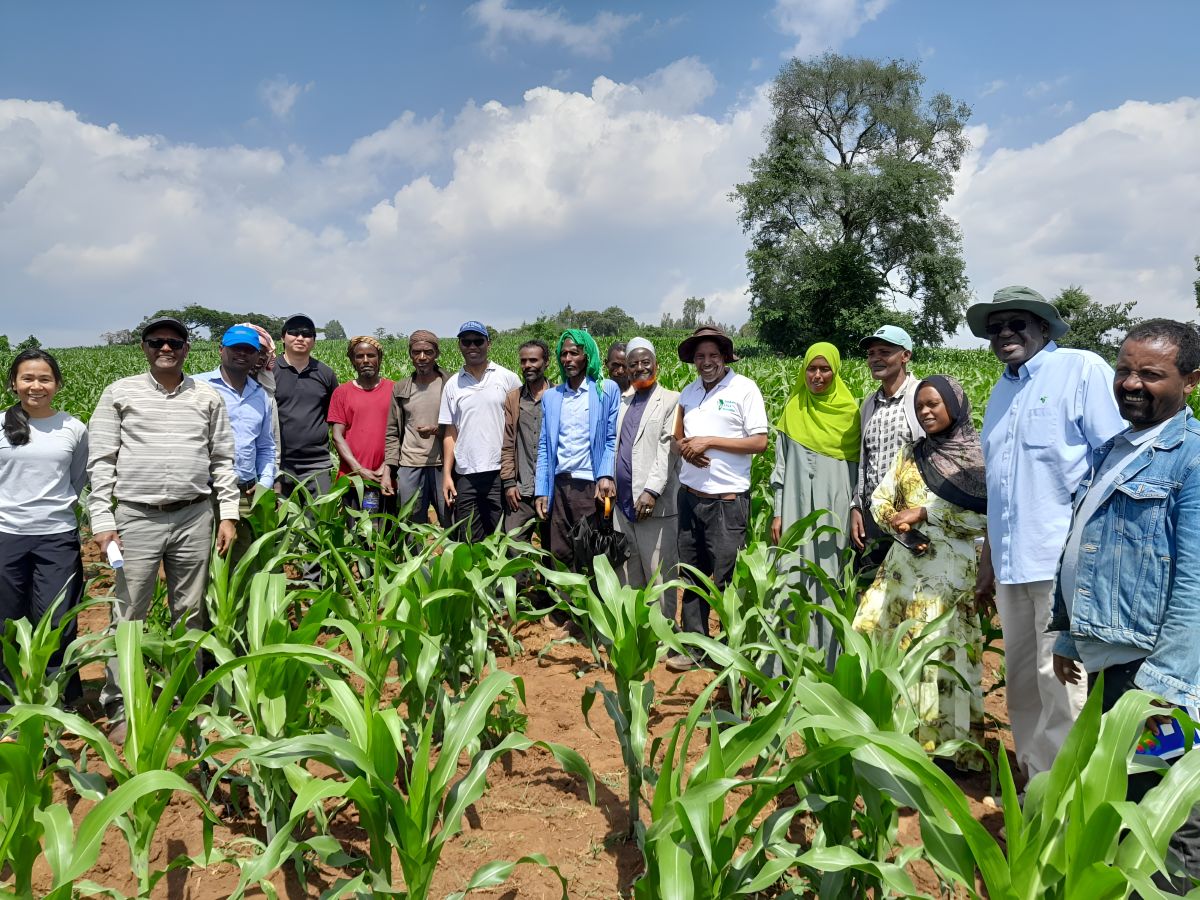
The AfDB delegation, together with farmers, extension agents, and SAA staff, poses for a group photo at a regenerative agriculture maize demonstration site under the PHRDG Project in Seka Chekorsa Woreda, Jimma Zone.
Throughout the visit, the delegation engaged directly with farmers, extension agents, and university lecturers to gain firsthand insights into the implementation and impact of these innovations. The interactions highlighted how regenerative agriculture technologies—supported by digital tools, scientific monitoring, and strong extension services—are improving agricultural productivity, enhancing soil health, reducing greenhouse gas emissions, and strengthening the resilience of smallholder farming systems to climate change.
Project Results Demonstrate Strong Progress
During the field visit, SAA Ethiopia Country Director, Dr. Fentahun Mengistu, provided the delegation with a comprehensive overview of the project's implementation progress, key achievements, field-level impacts, and lessons learned.
The briefing highlighted the project's significant progress in scaling regenerative agriculture technologies and strengthening extension services. To date, the project has directly benefited 8,411 farmers while mobilizing 91,166 stakeholders through awareness creation, training, and technology dissemination activities. It has established 186 regenerative agriculture demonstration plots across six cropping cycles, featuring alternating irrigated wheat and rainfed maize production systems, alongside 504 post-harvest technology demonstrations.
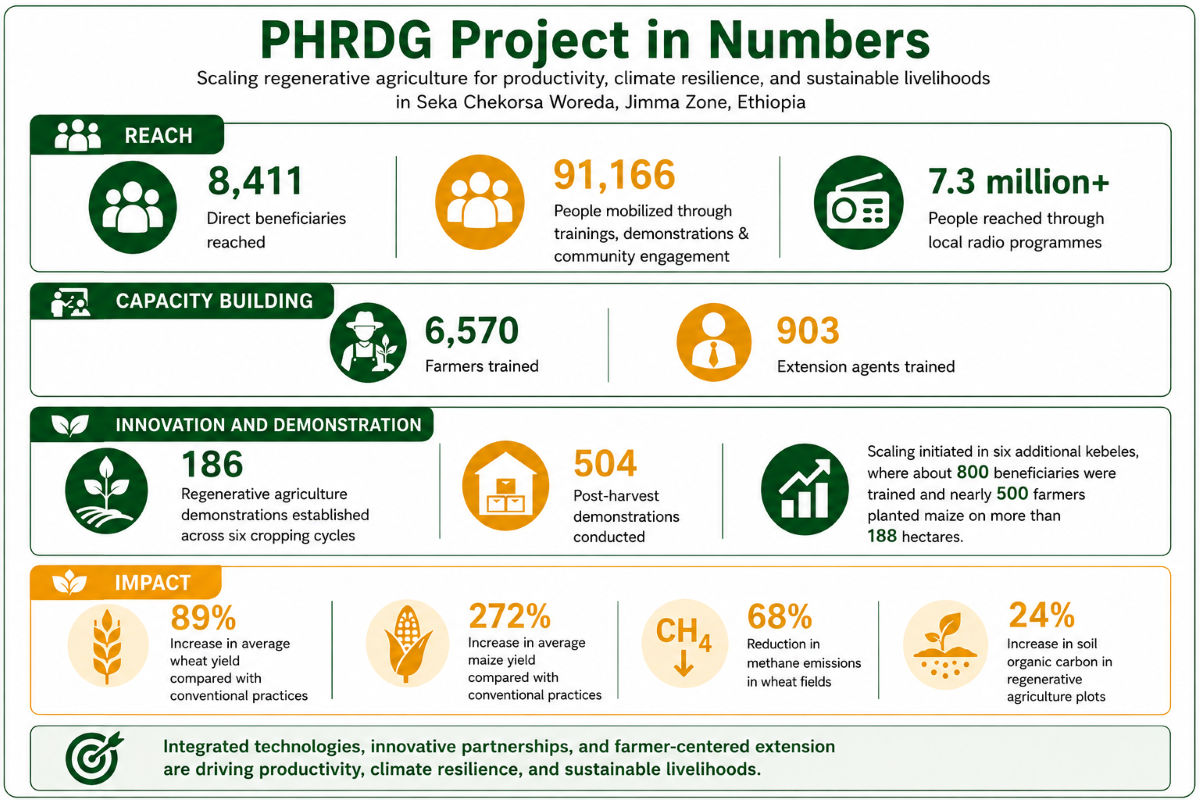
To strengthen local capacity and accelerate technology adoption, the project has also trained 6,570 farmers and 903 extension agents, equipping them with the knowledge and practical skills needed to implement regenerative agriculture practices, improve post-harvest management, and promote climate-resilient farming systems within their communities.
Project scaling has already expanded to six additional kebeles, where approximately 800 beneficiaries have been trained and nearly 500 farmers have established maize production on more than 188 hectares using regenerative agriculture practices. Beyond the field interventions, SAA has significantly broadened the project's outreach through local radio programming, reaching an estimated 7.3 million people within and beyond the project implementation areas, thereby raising awareness and promoting wider adoption of regenerative agriculture technologies.
Integrated Technologies Driving Results
Dr. Fentahun Mengistu emphasized that the project's success has been driven by the adoption of integrated regenerative agriculture packages that combine improved crop varieties, lime application, vermicompost, biochar, reduced tillage, mechanization, and digital extension services. Rather than promoting individual technologies in isolation, the project has demonstrated the effectiveness of integrating complementary innovations to address multiple production constraints simultaneously.
The results have been remarkable. Average wheat yields increased by 89 percent, while maize yields rose by 272 percent compared with conventional farming practices. Newly introduced maize varieties, particularly BH 549 and BH 520, performed exceptionally well, enhancing productivity while contributing to varietal diversification—one of the core principles of regenerative agriculture that strengthens resilience to climate variability and emerging production challenges.
The delegation was also briefed on scientific evidence generated by the International Institute of Tropical Agriculture (IITA) in collaboration with Jimma University. The findings showed that regenerative agriculture practices reduced methane emissions in wheat fields by 68 percent while increasing soil organic carbon by 24 percent compared with conventional production systems. These results provide strong evidence that regenerative agriculture can simultaneously mitigate greenhouse gas emissions, improve soil health, and enhance the long-term sustainability of farming systems.
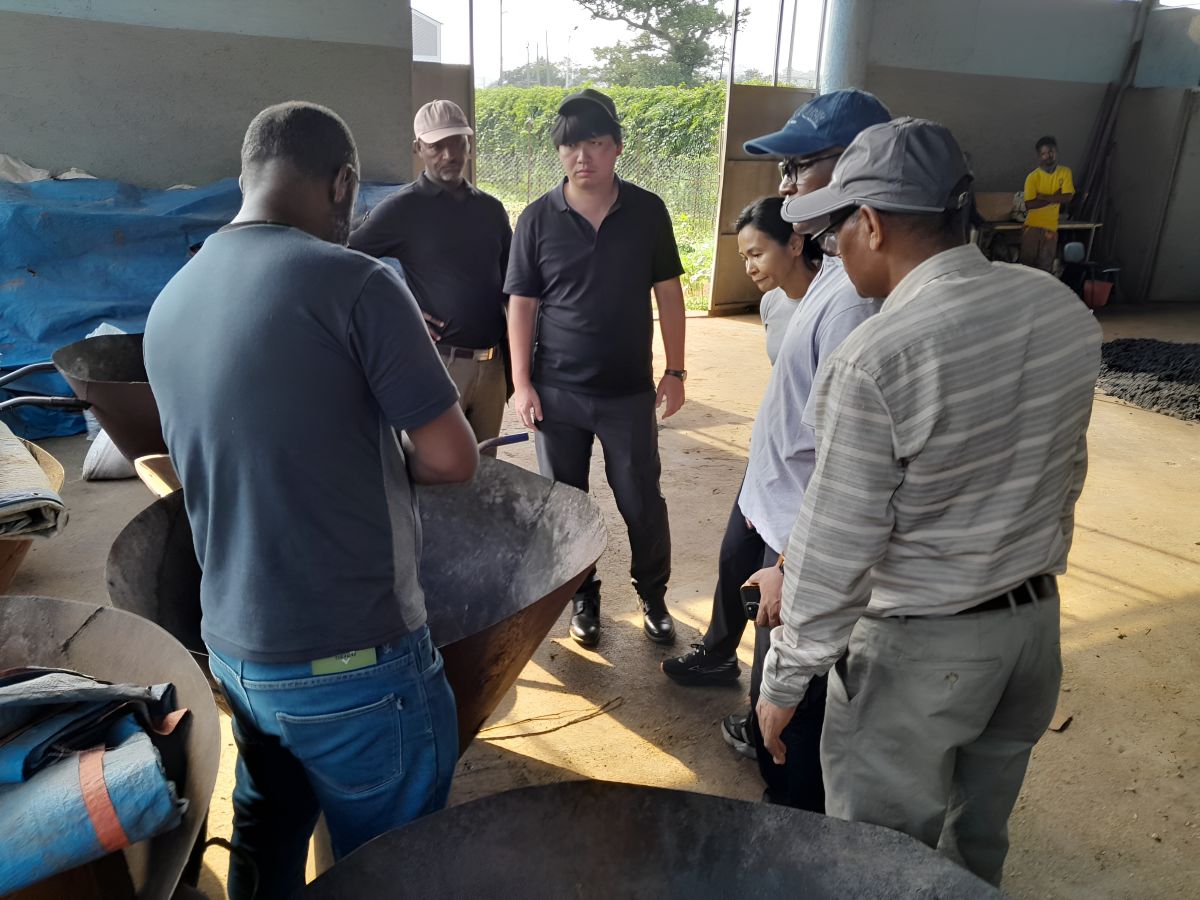
The AfDB delegation visits the biochar production facility at Jimma University.
The briefing concluded by highlighting several key lessons emerging from the project. These included the critical importance of correcting soil acidity, promoting integrated regenerative agriculture packages rather than isolated technologies, and using cluster-based demonstration approaches to accelerate farmer learning, peer-to-peer knowledge exchange, and large-scale technology adoption. Overall, regenerative agriculture was presented as a practical and scalable solution for addressing soil degradation, declining productivity, climate variability, and the long-term resilience of smallholder farming systems.
Farmers Share Their Experiences
During interactions with the delegation, participating farmers shared firsthand accounts of how regenerative agriculture interventions have transformed their farming systems and livelihoods. They explained that practices such as the application of biochar, vermicompost, and integrated soil management had improved soil structure, converting previously compacted hardpan soils into friable, fertile soils that support better crop growth. Farmers also reported noticeable changes in weed flora, with a reduction in difficult-to-control weed species, as well as improved performance and resilience of newly introduced crop varieties under increasingly variable climatic conditions.
The delegation commended the impressive field results, noting the high level of farmer participation, the visible improvements in crop performance, and the growing adoption of regenerative agriculture practices across the project sites. They observed that the project provides compelling evidence of the potential of integrated regenerative agriculture to improve productivity while strengthening climate resilience.
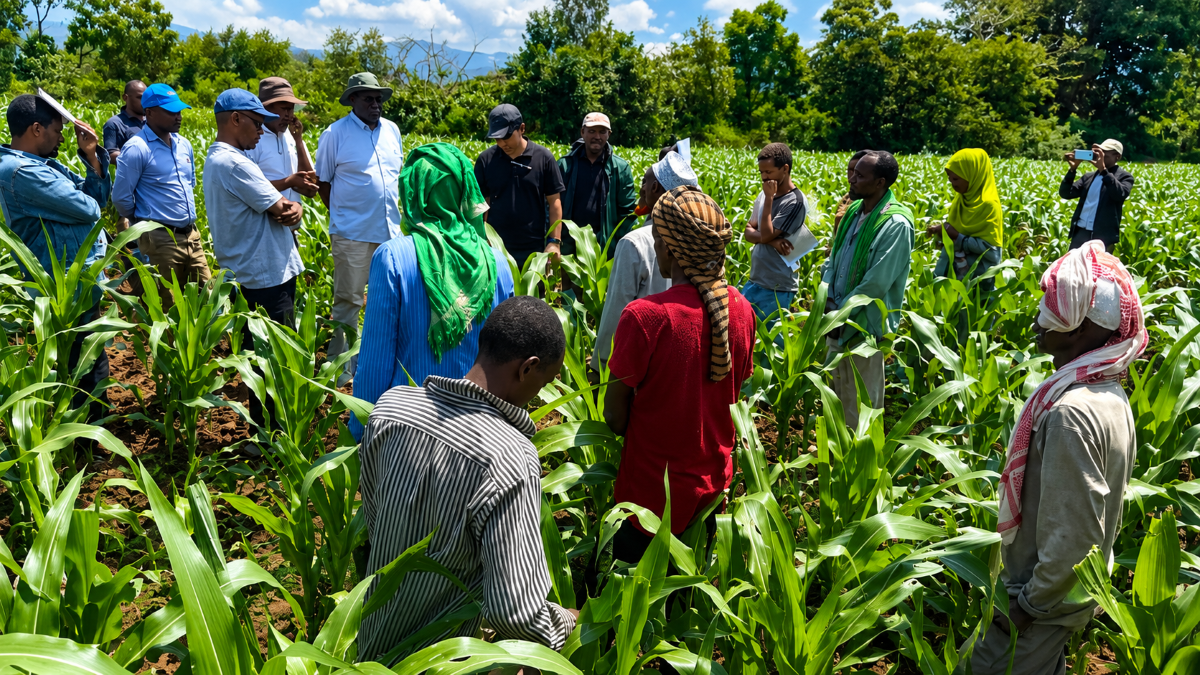
The AfDB delegation interacts with farmers at a regenerative agriculture maize learning cluster under the PHRDG Project in Shashemene Kebele, Seka Chekorsa Woreda, Jimma Zone, Ethiopia.
The AfDB team further emphasized the importance of systematically documenting the project's economic benefits and livelihood impacts to strengthen the evidence base for scaling regenerative agriculture. They also highlighted the need to demonstrate a viable carbon market model, noting that successful integration of carbon financing could create significant opportunities to incentivize regenerative agriculture adoption—not only in Ethiopia but across Africa.
Strategic Discussions on Scaling Impact
On 23 June 2026, the AfDB delegation visited the SAA Strategic Partnerships Office (SPO) in Addis Ababa, where discussions focused on SAA's broader programme portfolio, lessons emerging from the PHRDG regenerative agriculture project, and opportunities to deepen the strategic partnership between SAA and the African Development Bank.
The delegation noted that SAA's strategic pillars are closely aligned with the Bank's agricultural transformation agenda, particularly in strengthening agricultural extension, promoting climate-resilient farming systems, and accelerating technology adoption. The delegation also recognized SAA's extensive field presence, technical expertise, and farmer-centered delivery model as valuable assets for supporting the implementation of large-scale government investment programmes.
Reflecting on the field mission, the delegation described the technologies demonstrated as "small but impactful" and commended the project's integrated design. Particular appreciation was expressed for its strong collaboration with academic institutions, active farmer participation, emphasis on post-harvest technologies, ecosystem-based approach to crop production, and robust capacity-building programme for farmers and extension agents.
The discussions also highlighted the importance of strengthening the project's evidence base through comprehensive endline data collection, including indicators on carbon finance potential, household income, gender outcomes, and livelihoods. In addition, strategic dialogue explored how regenerative agriculture could be further institutionalized through stronger government ownership, enhanced private-sector engagement, improved climate adaptation measures, expanded small-scale irrigation, and more business-oriented approaches to technology delivery.
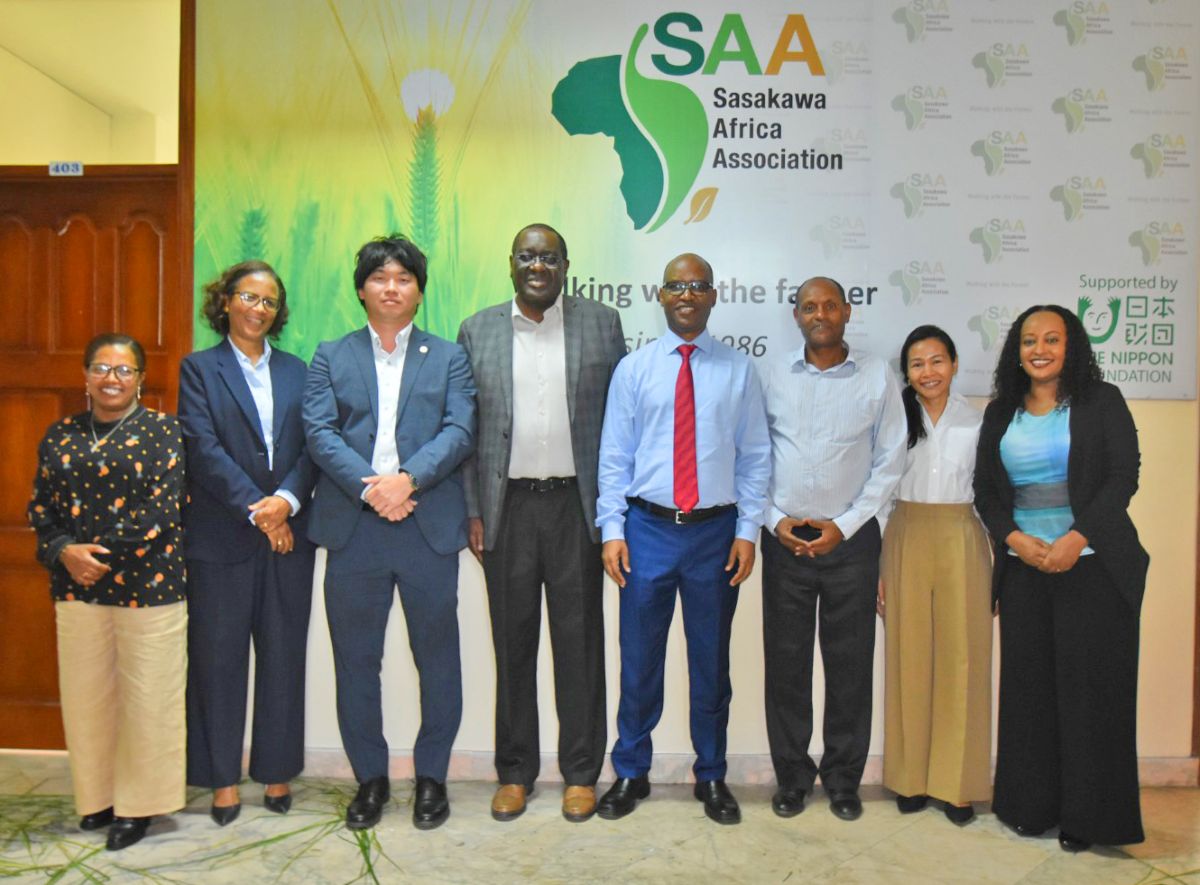
SAA and AfDB Representatives pose for a group photo following strategic discussions at SAA’s Strategic Partnerships Office (SPO) in Addis Ababa.
Looking ahead, both parties explored opportunities to consolidate project achievements and scale successful regenerative agriculture interventions beyond the current project. The delegation further encouraged SAA to position its successful approaches for integration into future Bank-financed operations through Regional Member Countries (RMCs). In this regard, the delegation encouraged SAA to actively engage in the Bank initiatives by demonstrating its comparative advantage in agricultural extension, capacity building, and technology scaling, with the goal of reaching millions of smallholder farmers through coordinated continental investment platforms.
Looking Ahead
The visit reaffirmed the shared commitment of the Sasakawa Africa Association (SAA) and the African Development Bank (AfDB) to advancing regenerative agriculture as a practical and scalable pathway for improving agricultural productivity, restoring soil health, strengthening climate resilience, reducing greenhouse gas emissions, and enhancing the livelihoods of smallholder farmers across Africa.
By integrating scientific research, AI-enabled digital technologies, farmer-centered extension, capacity building, and multi-stakeholder partnerships, the Japan-funded Policy and Human Resource Development Grant (PHRDG) Project is generating robust evidence and practical lessons that can inform national policies and guide the scaling of regenerative agriculture across Ethiopia and beyond.
Building on these achievements, SAA and its partners are well positioned to expand the adoption of regenerative agriculture through stronger government ownership, increased private-sector engagement, and strategic investment partnerships. The project provides a solid foundation for scaling climate-smart, regenerative farming systems that contribute to more resilient, productive, and sustainable agrifood systems, while supporting Africa's broader agricultural transformation agenda.
【Read more about the project’s progress and impact】
SAA Promotes Climate-Resilient Practices and Youth-Led Post-Harvest Services under the PHRDG Project
Voices from the Field: Farmers Embrace Regenerative Agriculture under the PHRDG Project
Advancing Regenerative Agriculture through the PHRDG Project
Strengthening Climate-Resilient Agriculture through Innovation and Partnerships
SAA Publications
E-newsletter
"Walking with the Farmer"
SAA publishes a bimonthly e-newsletter reporting on SAA activities.
SAA Mail News
Sign up to receive our e-newsletter and upcoming event information via email.

SAA history book
"Walking with the Farmer: The journey of the Sasakawa Africa Assoication since 1986"
This book chronicles the history of SAA from its inception to the present.
Annual Report
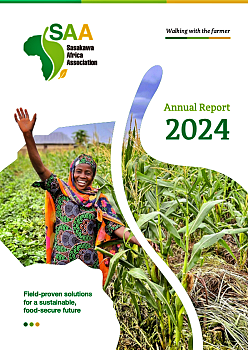
Annual Report FY2024
Annual Report FY2024 is available here.


